

In our screen-dominated world, many of us spend hours each day hunched over smartphones, tablets, or laptops. This habitual forward head posture, often called “tech neck,” leads to chronic pain, stiffness, and long-term musculoskeletal issues. The good news? A simple, affordable solution exists: ergonomic phone stands. These clever accessories lift your device to eye level, encouraging neutral spine alignment and dramatically reducing strain on your neck and shoulders.
This comprehensive buyer’s guide explores why ergonomic phone stands are essential in 2026, the science behind their effectiveness, the key features to prioritise, different types available, and my top recommendations. Whether you work from a desk, relax in bed, or travel frequently, you will find the perfect stand to protect your posture and boost comfort. By the end, you will know exactly how to choose one that fits your lifestyle – and why investing in the right model could be one of the smartest health decisions you make this year.

Understanding Tech Neck: Why Your Phone Is Hurting You
Tech neck is not just a buzzword; it is a genuine medical concern backed by years of research. When you tilt your head forward to stare at a phone held in your lap or on a table, the weight of your head (around 5 kg in a neutral position) multiplies dramatically. At a 45-degree angle – the typical viewing position when scrolling – the effective load on your cervical spine can exceed 22 kg. Over time, this constant strain fatigues the neck extensors, tightens the upper trapezius muscles, and compresses discs and nerves.
Studies from institutions such as the Mayo Clinic and UCLA Health confirm that prolonged forward head posture increases muscle loading, reduces endurance in the deep cervical flexors, and contributes to headaches, shoulder pain, and even disrupted sleep. One recent trial on neck-mounted holders showed that simply raising the device reduced cervical flexion from over 57° to just 13°, slashing gravitational torque on the spine and easing posterior muscle over-activation.
The solution is straightforward: keep your screen at eye level. An ergonomic phone stand does exactly that, allowing you to maintain a neutral posture where your ears sit directly over your shoulders. The result? Less pain, better focus during video calls or streaming, and prevention of long-term damage. Many users report noticeable relief within days, and combining stands with simple chin-tuck exercises or 20-20-20 screen breaks amplifies the benefits.
Key Features to Look for in an Ergonomic Phone Stand
Not all phone stands are created equal. To truly reduce neck strain, focus on these critical features:
Height and Angle Adjustability The most important factor. Look for stands offering at least 10–20 cm of height adjustment and tilt angles from 0° to 235° or more. This lets you position the screen exactly at eye level whether you are sitting at a desk, standing, or reclining. Fixed stands force awkward angles; adjustable ones adapt to you.
360° Rotation and Swivel Full rotation prevents glare and lets you share the screen easily during calls or group viewing. Infinite-axis mechanisms (often with silent bearings) ensure smooth movement without wobble.
Stability and Build Quality A weighted aluminium base with non-slip silicone pads is essential. Cheap plastic stands topple easily, especially with larger phones or tablets. Premium models use aircraft-grade aluminium or reinforced clamps that grip desks or headboards securely.
Compatibility Universal holders should fit 4–10 inch devices, including phones in thick cases. Bonus points for tablet support and pass-through charging ports.
Mounting Options Desk stands suit offices; gooseneck arms with strong clamps work for beds or kitchen counters; neck-mounted lazy brackets offer true hands-free freedom anywhere.
Portability Foldable or lightweight designs (under 300 g) are ideal for travel. Some collapse flat enough to slip into a bag.
Extra Perks 360° swivel bases, cable management, or even wireless-charging compatibility add convenience without compromising ergonomics.
Price ranges in the UK typically run from £12 for basic models to £45 for premium gooseneck or fully adjustable aluminium versions. Spending a little more on quality pays off in durability and daily comfort.


Types of Ergonomic Phone Stands
Desktop Adjustable Stands These sit on your desk or table and offer height and tilt adjustment. They are perfect for work-from-home setups, video calls, or second-screen use. Tall models (up to 20 cm) bring the phone to eye level without extra monitors.
Gooseneck and Clamp Mounts Flexible arms (often 30–50 cm long) with sturdy clips attach to desks, beds, or headboards. Ideal for lying down or hands-free cooking and crafting. The best versions hold heavy devices without drooping.
Neck-Mounted Lazy Holders These wearable or pillow-style brackets position the phone directly in your line of sight while reclining or sitting casually. Magnetic or clip versions reduce neck flexion dramatically and are popular for bedtime scrolling or travel.
Floor Stands and Tripods Tall, tripod-style holders suit living rooms or group viewing. Adjustable legs and rotating heads provide cinema-like ergonomics without bending forward.
Portable and Foldable Options Compact aluminium designs fold flat for bags or pockets. They sacrifice some height adjustment but excel for commuters or minimalists.
Each type addresses different scenarios, but all share the goal of eye-level viewing to protect your cervical spine.


Top Recommendations for 2026
Here are standout models available in the UK that excel at reducing neck strain:
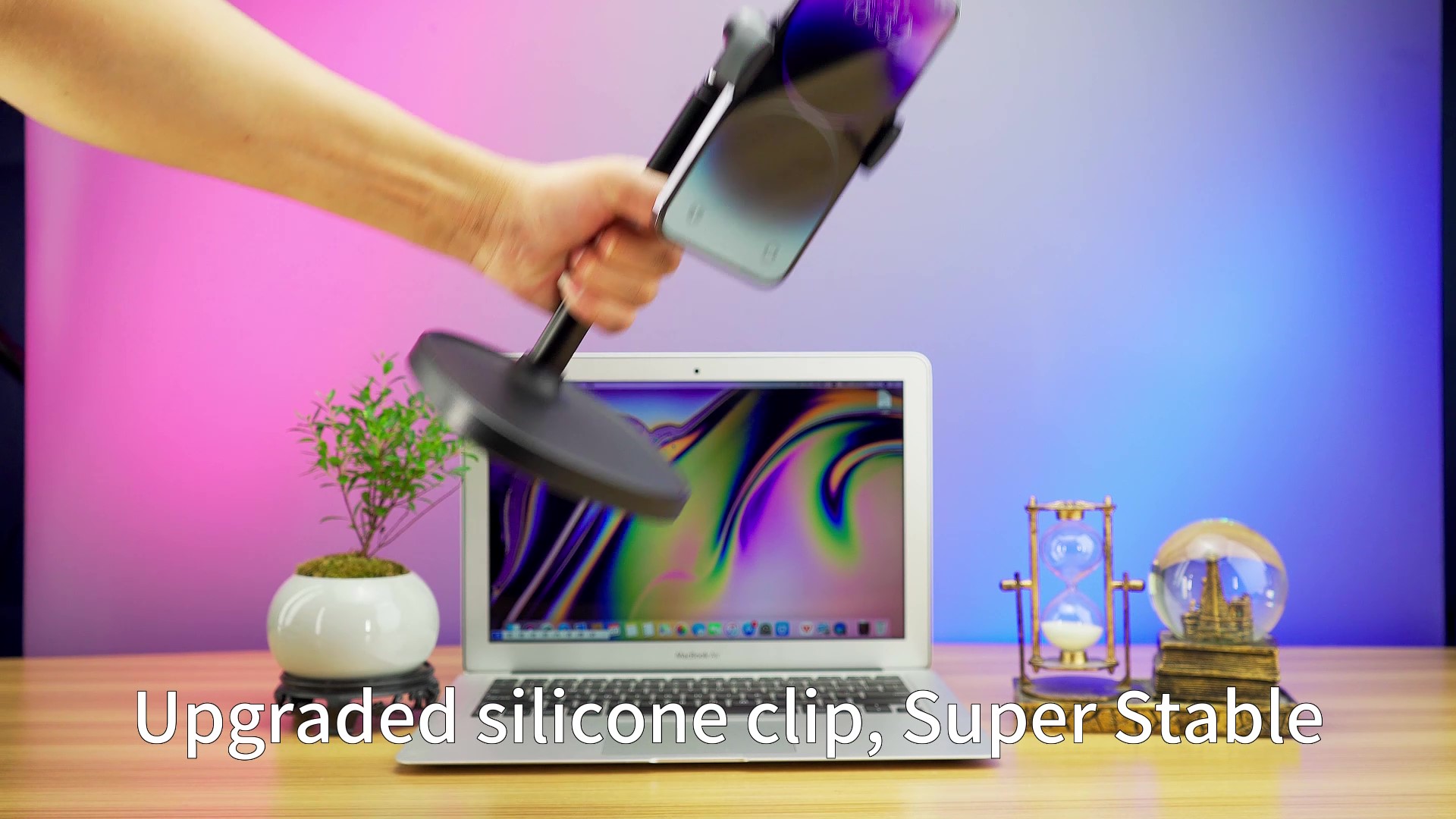
- LISEN Adjustable Aluminium Desk Stand (around £25) This taller photogenic model extends up to 20 cm with smooth height and angle adjustment. Its weighted base and silicone grips keep even iPad Pro models rock-steady. Users love the 235° tilt for perfect eye-level viewing during long work sessions. Best for desk users seeking all-day comfort.
- Lamicall Gooseneck Phone Holder (around £22) The upgraded clamp and braided flexible arm let you position your phone overhead while lying in bed or clipped to a kitchen counter. It eliminates neck bending completely for reading or video calls. Highly stable and compatible with thick cases – a favourite for bedtime and hands-free tasks.
![Lamicall Gooseneck Phone Holder for Bed - [Upgraded Stable Clip] for Desk, Headboard, Bed, Bedside, Table, Flexible Gooseneck Long Arm Stand, Overhead Cell Phone Clamp Mount, Gift for All 4-7” Device : Cell Phones & Accessories - Amazon.com](https://m.media-amazon.com/images/I/51gkJBwRIiL.jpg_BO30,255,255,255_UF750,750_SR1910,1000,0,C_QL100_.jpg)

- Telesin Magnetic Neck Mount or MoKo Lazy Gooseneck Pillow Holder (around £18–£28) These neck-mounted options keep the screen at eye level no matter your position. The magnetic or flexible designs reduce cervical flexion dramatically, as shown in clinical trials. Ideal for travellers, commuters, or anyone who scrolls while reclining.
- Nulaxy or UGreen Foldable Portable Stand (around £15) Lightweight and compact, these aluminium foldables offer excellent angle adjustment for travel or quick desk setups. Though shorter than full-height models, they still lift devices high enough to cut strain significantly.

- Premium 360° Swivel Models (e.g., Uncaged Ergonomics or similar rotating bases) (around £30–£40) These feature infinite rotation and height adjustment in a sleek design. Perfect for kitchens, shared workspaces, or anyone who switches between portrait and landscape frequently.

All these recommendations prioritise stability and adjustability proven to alleviate tech neck.
How to Choose the Right Stand for Your Lifestyle
Ask yourself: Where will I use it most? Desk workers should prioritise tall adjustable stands. Bedtime readers need gooseneck or neck-mounted options. Travellers want foldable portability. Consider your phone size and case thickness, daily usage hours, and budget. Test return policies on sites like Amazon UK – many offer easy refunds if the stand does not suit your posture perfectly.
Pair your new stand with good habits: take screen breaks, perform chin tucks, and maintain overall ergonomic workspace setup (monitor at eye level, supportive chair). For severe pain, consult a physiotherapist alongside these tools.
Final Thoughts
Ergonomic phone stands are no longer luxury accessories; they are essential tools for modern health. By elevating your device to eye level, they combat tech neck at its source, improve posture, reduce pain, and enhance daily comfort. With the wide range available in 2026 – from budget desk models to advanced gooseneck systems – there is an option for every need and budget.
Invest in one today. Your neck will thank you for years to come.
0 comments